One of the best things and worst things about Syria is it’s ethnic and religious diversity. For tourists, it’s truly unique – you feel as though you’re travelling between different countries and societies simply by crossing into the next neighbourhood. But it can also be a source of tension. As a foreigner that lives in Syria, speaks Arabic, and runs tours in this fascinating country, this is something that fascinates me, but can also make me uneasy. So what groups is the ethnic and religious fabric of Syria made up of, and what tensions are there between them?
While most statistics point out that around 70% of Syria’s population are Sunni Muslims, this refuses to acknowledge the diversity within that group, of which different ethnicities exist. For instance, Arabs, Kurds and Turkmen all belong to this category and yet have their own unique cultures and languages. In this blog, I’ll be explaining many of the main ethnic and religious groups of Syria that make this country so unique for visitors, and also attempt to give you a little background information about potential tensions between them and political allegiences.
Christians of Syria
In general, the Christians of Syria don’t fall into a specific political block. Instead, they tend to focus inward, doing their best to keep their communities safe, and if possible, thrive. Some Christians feel as though their community is more at threat now than before the fall of Assad, with a deadly church bombing occuring in Damascus in June 2025, and other events occuring.
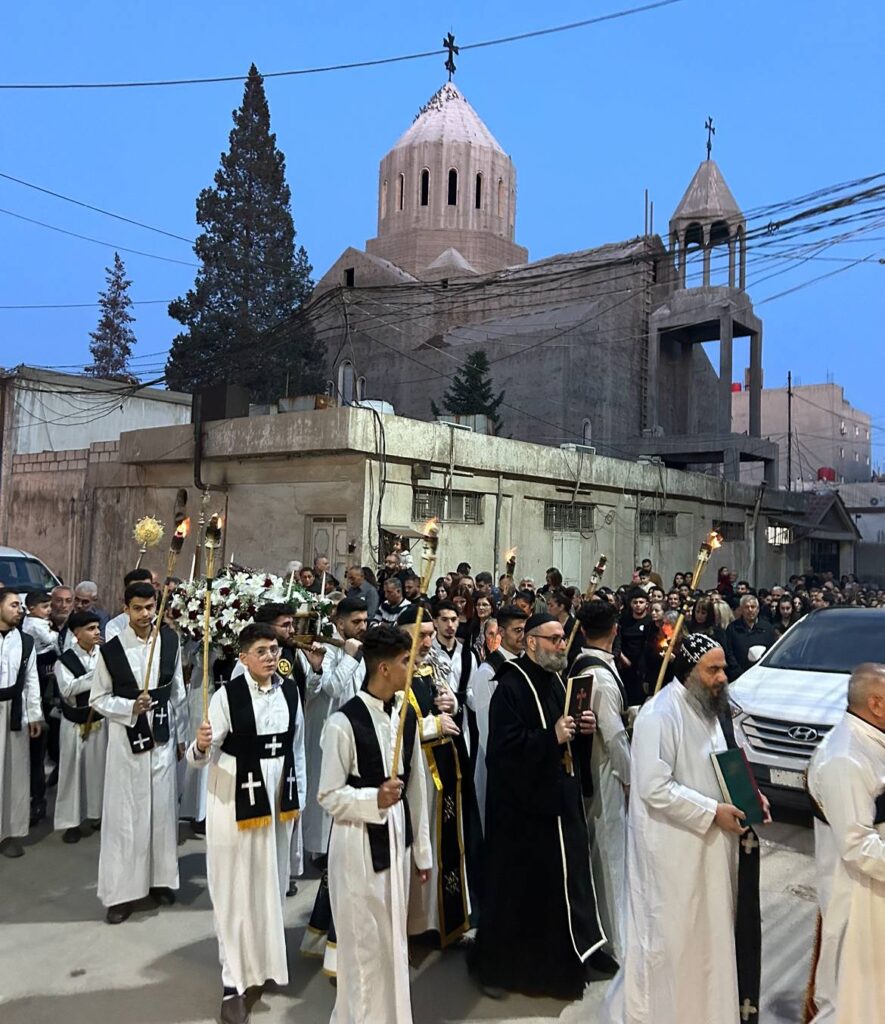
Christians in Syria identify with various different ethnic groups in Syria. For instance, Arabs, Armenians and Assyrians. Their native languages can be Armenian, Arabic, Syriac or Western Aramaic. Many people estimate that Christians make up around 10% of Syria’s population, but in some parts of the country, I believe it to be higher. There are large Christian communities in the cities of Damascus, Homs, Latakia, Aleppo, Qamishli, Al Malikiyah and more. Furthermore, there are many Christian majority towns in other parts of the country, such as rural Hama (eg. Maharda).
Christians in Syria are split into 5 different groups. These groups include Oriental Orthodox (Armenian and Syriac Orthodox), Eastern Orthodox (Greek and Russian), Roman Catholics, Eastern Catholics and Protestants.
One of the best Christian towns to visit in Syria is Maaloula, a place near Damascus where local residents still speak Western Aramaic, the language of Jesus. The towns hosts the annual festival of the “Day of the Cross”. This is one of my favourite experiences in Syria, and is highly recommended.
One may also celebrate Akitu, the Assyrian New Year, with the Assyrian community in Qamishli in March every year, a fantastic cultural festival. Futhermore, Easter parades take place is all major cities, which is something unique to see!
If you’re in Aleppo, make sure to visit Sulaymaniyah area, where you’ll find tons of Armenian shops and you’ll hear the Armenian language spoken everywhere. The Armenian 40 Martyr’s Cathedral is also an architectural wonder, and totally worth a visit.
The Kurds
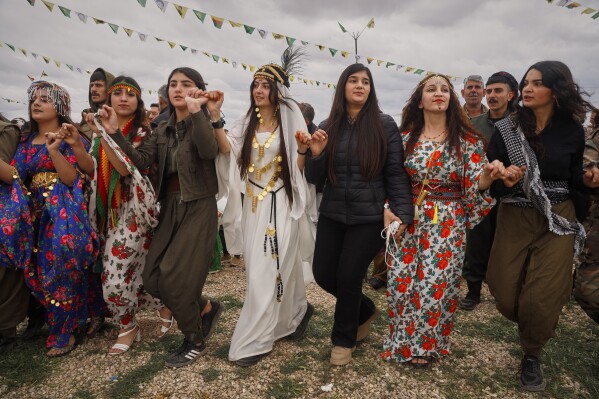
Syria is home to more than 2 million Kurds, who speak the Kurmanji dialect of Kurdish and have their own unique culture. Kurds are mostly present in the North of Syria, but also call the neighbourhood of “Rukn Al Deen” home in Syria’s capital, Damascus. In Aleppo governate, you’ll find a Kurdish majority in the beautiful mountainous area of Afrin, Kobane city (Ain Al Arab), as well as the neighbourhoods of Ashrafieh and Sheikh Maqsood in Aleppo city. They are also present in Syria’s North East, especially in the city of Qamishli and Derek (Al Malikiyah), as well as the rural villages around this area.
If you’d like to experience Kurdish culture, the best time of year to visit their regions in March, when they have the Nowruz festival. This unique festival is filled with fire, Kurdish dancing, music and celebrations!
Politically, there are tensions between some Kurdish groups and the majority Sunni Arab population. This is partly due to North-Eastern Syria being controlled by the Kurdish-led SDF, with some members of it calling for an independent Kurdistan, meaning cessation from Syria. Furthermore, the SDF has previously controlled large parts of Arab-majority Syria such as Raqqa, with many Syrian Arabs accusing them of forced conscription and adhering to their secular ideology. Many secular Kurds, on the other hand, are suspicious of the new government and those that support it, believing many of its members to have an Islamist terrorist past. Other ethnic and religious groups in Syria tend to view Kurds fairly positively due to their acceptance of people from other backgrounds, even if they don’t agree with seperatist tendencies.
Turkmen of Syria
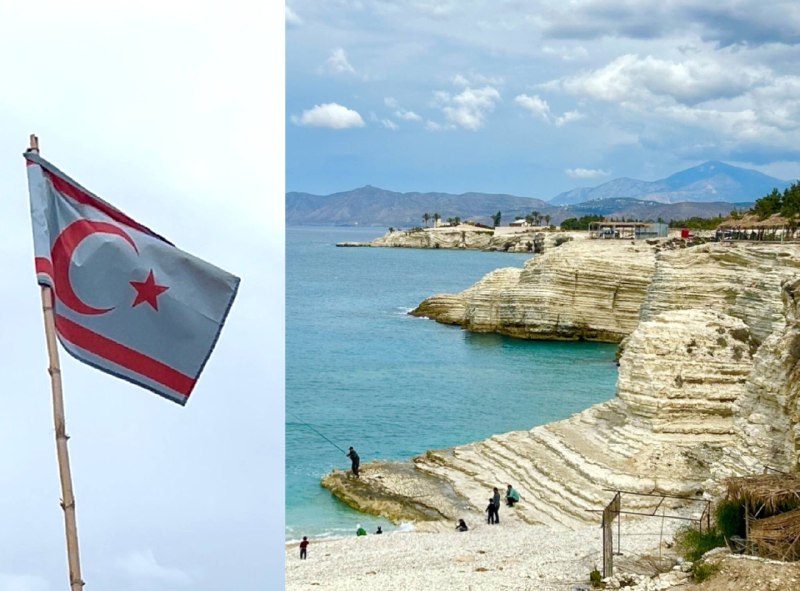
Like the Kurds, most Turkmen are Sunni Muslim. They are a major ethnic group in Syria, and unlike the Kurds, tend to be quite conservative. The Turkmen of Syria speak a dialect of Turkish, and make up about 5% of Syria’s population. It’s common to find them all over Western Syria, although the largest populations are in rural Aleppo province and Latakia province. Some interesting, and naturally beautiful areas where you’ll hear Turkish being spoken include Slayab Al Turkman and Um Al Tayoor in Latakia. Both town have gorgeous coastal scenery and friendly locals.
The Turkmen of Syria, despite their different language, are probably considered to be the closest to the Sunni Arab majority. They tend to be conservative, and there aren’t any outstanding issues between them. It is known that many Turkmen were fighting alongside rebels against the Assad regime, and, as a result, the Assad regime oppressed their towns and villages.
The Druze of Syria
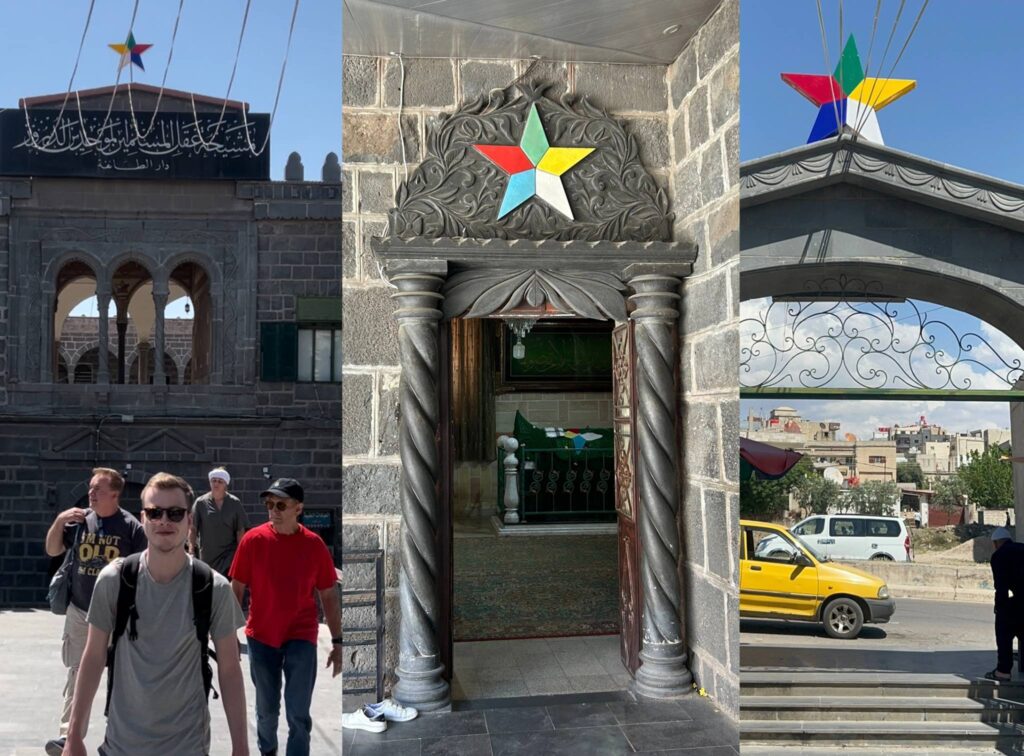
While some people consider it a sect of Islam, the Druze faith is considerably different and most Syrian Druze do not consider themselves Muslim. Internationally, Syria is home to the largest amount of Druze citizens, with the majority of them being found in the southern province of Suweida. Druze populations also exist in Damascus, the Mount Hermon area, and Jebel Sumaq region in Idlib. An interesting statistic is that more than half a million Druze of Syrian origin live in Venezuela! Visiting the Druze majority province of Suweida is very interesting, and it’s one of my favourite regions to visit in Syria. Unfortunately, as of January 2026, it is not safe to go there, primarily due to the risk of clashes between the Damascus government and the local “National Guard” that controls the region. A good alternative to learn about the Druze of Syria would be by visiting the Jaramana area of Damascus.
Before the fall of Assad, I would argue that tensions between the Druze and the rest of the Syrian population were fairly non-existent. In fact, solidarity protests between Suweida (Druze majority) and Idlib (Sunni Arab majority) took place, with both areas being known for anti-Assad protests.
However, in the summer of 2025, things unfortunately took a different turn. Tensions between local Druze fighters in Suweida and bedouins spiralled out of control, with Damascus sending in troops to “control the situation” and bring Suweida under government control. Unfortunately, many of the troops affiliated with Damascus are accused of killing and kidnapping Druze civilians in the unrest, while Druze fighters were accused of killing and kidnapping bedouin civilians. The fighting stopped when Israel bombed Damascus in support of the Druze and threatening intervention on their behalf. This led to a government withdrawal, and Israeli flags were raised in demonstrations in Suweida. These events led many Sunni Arabs to view the Druze as traitors and Israeli agents, and Druze to view Sunni Arabs as sectarian people supporting massacres against Druze in Suweida.
The Alawites
While commonly associated with Shia Islam, the Alawites are noticeably different to most Shias, both in beliefs and behaviour. They make up the majority of the population in the Syrian coastal provinces of Latakia and Tartous. This secretive sect has core beliefs that differ from mainstream Islam, such as the (supposed) idea that Imam Ali is a manifestion of God, and have their own concept of the “Divine Trinity”, which I understand to be similar to the Holy Trinity for Christians. Furthermore, the sect generally doesn’t prohibit consuming alcohol, unlike other Muslims. For centuries, the beliefs of Alawites have been very secretive, and many rumours about their beliefs exits. This is further complicated by different sects within the Alawites, such as the Murshidis.
The former Syrian dictator, Bashar Al Assad, was an Alawite. However, most Alawites today do not like to associate themselves with him – it is a sensitive topic. Many generals and people of power during the Assad regime were also Alawites. Hence, some Sunni Arabs, whose neighbourhoods were bombed and children were abducted by the Assad regime, blame Alawites.
In March 2025, following an attack on new government forces by Assad regime remnants, Damascus sent many troops to the Syrian coast. Unfortunately, in a similar situation to Suweida, tons of innocent civilians of the Alawite faith were murdered, not only Assad remnants. Many of those who took part in the massacres recorded it.
However, in December 2025, when Alawite citizens came out and decided to protest, there were very few abuses recorded. In fact, it seems as though most of the security forces were protecting them. While high tensions remain, I believe that they are cooling down.
Other groups
Other ethnic and religious groups in Syria exist, albeit in small numbers. For instance, there are the Yazidis, a unique religious group who was severely persecuted by ISIS. There’s also the Circassians, who are Sunni Muslim but have their unique culture and are great at dancing! Syrian Jews are very verrryy few in numbers, but their cultural heritage exists, with synagogues accross the country (especially Damascus, Aleppo and Qamishli) and beautiful old houses. Ismaili Shias also exist, primarily in Salamiyah area, and Twelver Shias can be found in rural Aleppo (Nubl and Zahra) and Damascus. There are also Alevis (not Alawites) who are a distinct religious sect. In Syria some of them are Turkmen with others are Kurdish. These are just a few of the sects in Syria that I wasn’t able to cover in this article.
Prospects for the future: stability or more tension?
It’s not easy to keep together such a diverse populace like Syria. But the country has only just come out of a brutal war, and some areas are still experiencing fighting. You can’t expect these tenstions to evaporate overnight, especially when such stark differences between the ethnic and religious groups of Syria exists.
With the right messaging and laws from the government (recent decree about Kurdish rights for instance), a more diverse armed forces (might happen if there is SDF integration) and the right education, hopefully such tensions will be a thing of the past.
One major issue is that when someone does something bad, especially if done in the name of religion, the whole sect gets blamed by many. The society must move on from this sectarian way of thinking.